
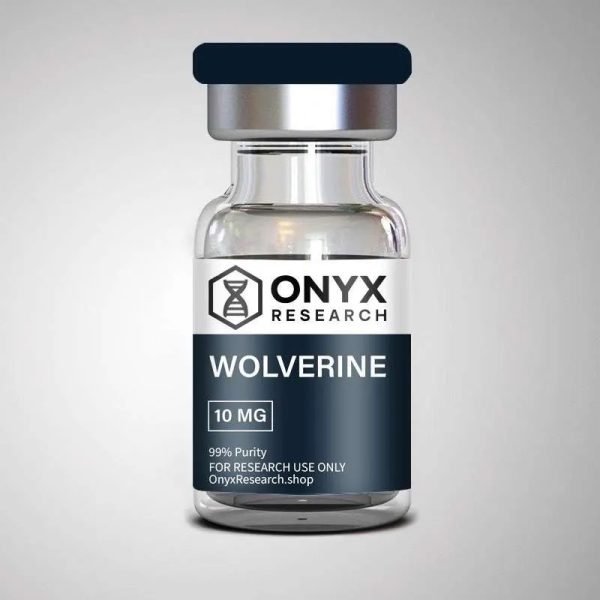
WOLVERINE 10MG (BPC157/TB500)
$80.00
🔬 Product Code: WOLV-10MG
🧪 Specification: 10mg Total Lyophilized Powder (Dual-Peptide Research Matrix)
🧬 Purity: ≥99% Combined Purity Verified via HPLC / MS
⚠️ Application: For In-Vitro and Preclinical Laboratory Research Only. Not for human or veterinary use.
🔬 Product Code: WOLV-10MG
🧪 Specification: 10mg Total Lyophilized Powder (Dual-Peptide Research Matrix)
🧬 Purity: ≥99% Combined Purity Verified via HPLC / MS
⚠️ Application: For In-Vitro and Preclinical Laboratory Research Only. Not for human or veterinary use.
WOLVERINE 10MG (BPC157/TB500) Product Overview
The Wolverine 10mg Blend is a classic, highly synergistic dual-peptide configuration engineered to study the overlapping pathways of accelerated tissue repair, angiogenesis, and skeletal muscle regeneration. By combining two of the most heavily researched cellular healing factors in a single matrix, this formulation allows researchers to investigate compounding physiological recovery cascades:
-
BPC-157 (Body Protection Compound-157): A highly stable, gastric-derived 15-amino acid sequence. In preclinical biological models, BPC-157 is widely studied for its ability to upregulate vascular endothelial growth factor (VEGF) pathways, fast-tracking localized angiogenesis (the sprouting of new microvascular blood vessels) to restore nutrient delivery to damaged, poorly vascularized tissues like tendons and ligaments.
-
TB-500 (Thymosin Beta-4 Active Fragment): An isolated, low-molecular-weight sequence of the naturally occurring actin-sequestering protein Thymosin Beta-4. It acts as a primary driver of cell mobility and tissue proliferation by regulating actin polymerization. TB-500 is heavily researched for its capacity to rapidly pull migratory cells, keratinocytes, and endothelial cells directly into zones of physical structural trauma.
When administered together within an experimental model, the Wolverine matrix optimizes a multi-stage healing environment: BPC-157 works fundamentally to establish the microvascular supply network and protect cell structural integrity, while TB-500 drives rapid cellular migration and actin-mediated tissue remodeling to accelerate overall structural closure.
Key Research Applications
-
Synergistic Connective Tissue Repair: Evaluating the combined impact of actin-regulating and angiogenic peptides on accelerating tendon, ligament, and bone structural healing in animal profiles.
-
Angiogenesis and Microvascular Density: Mapping changes in blood vessel development and localized tissue perfusion when exposed concurrently to VEGF-upregulating and cell-migratory molecules.
-
Myogenesis and Myofibrillar Regeneration: Investigating cellular recovery rates, collagen deposition alignment, and functional repair markers in skeletal muscle tear models.
Uncompromising Quality Control
Every multi-peptide vial distributed by Onyx Research undergoes separate and combined independent, third-party analytical verification to guarantee absolute data integrity for your trials.
-
High-Performance Liquid Chromatography (HPLC): Confirms absolute baseline purity (guaranteed ) across both peptide sequences.
-
Mass Spectrometry (MS): Independently verifies correct molecular identity and sequence alignment for both BPC-157 and TB-500, ensuring complete freedom from structural contaminants.
-
Lyophilization Technology: Vacuum-sealed in clinical-grade glass vials to guarantee optimal structural stability during transport and storage phases.
Handling & Storage Guidelines
-
Form: Lyophilized (freeze-dried) white crystalline powder.
-
Reconstitution: Reconstitute using sterile bacteriostatic water. Guide the fluid slowly down the inner glass wall of the vial and swirl gently. Do not shake, vibrate, or agitate aggressively to prevent peptide shearing.
-
Storage (Lyophilized): Stable at room temperature for up to 4 weeks during transit. Store long-term at to preserve peptide integrity for up to 24 months.
-
Storage (Reconstituted): Once in solution, store under refrigeration at to and utilize within 10 to 14 days for optimal experimental consistency.
Laboratory Safety Disclaimer: This compound blend is supplied exclusively to qualified professionals, academic institutions, and commercial laboratories engaged in scientific innovation. Onyx Research explicitly prohibits the administration of this material to humans or animals. All handling must conform to strict laboratory safety standards, including the use of proper personal protective equipment (PPE).
Be the first to review “WOLVERINE 10MG (BPC157/TB500)”
Related products
Uncategorized
Uncategorized
Uncategorized
Uncategorized
Uncategorized
Uncategorized
Uncategorized
Uncategorized
Reviews
There are no reviews yet.